
New Year, New Changes. EEOC Moves to Rescind Guidance on Workplace Harassment
February 26, 2026
Does Burden Shifting Still Exist in the World of Employment Law Case law on Reverse Discrimination Cases!!!
March 6, 2026
By Walter Gonzalez, Esq., and Ty Hyderally, Esq.
March 3, 2026
Contrary to what my parents espoused during my earlier years -Esports has rapidly evolved from a niche pastime into a global, billion-dollar industry. What once looked like casual online competition now supports professional players, coaches, analysts, content creators, streamers, marketing teams, and event staff. As the business of gaming continues to grow, so do employment disputes. Many of the legal problems now appearing in esports mirror those seen in more traditional industries, including wage theft, discrimination, retaliation, and worker misclassification. The difference is that many esports workers are young, digitally based, and uncertain whether they are protected by employment laws at all.
In reality, workers in esports in New York and New Jersey are already covered by strong state labor and anti-discrimination laws, even when their employers insist they are “independent contractors” or “team partners.” The name in a contract does not necessarily control and what is written is not dispositive. Courts and labor agencies look at how the relationship actually functions.
This issue is not based upon a hypothetical. In the early professional League of Legends ecosystem, North American teams were investigated after players complained that they were effectively being paid only through prize pools or stipends that fell below minimum wage, once deductions such as mandatory practice, streaming, travel, and promotional work were considered. The scrutiny forced Riot Games to require teams to provide guaranteed salaries and baseline employment protections to participate in the league, as detailed in the well-researched law journal article by Jackson Wong.[1] What began as a prize-only model had become legally untenable once the level of control and time demands were exposed.
In New Jersey, the law presumes a worker is an employee, unless the company proves otherwise under the ABC test. That test requires the company to show that the worker is free from its control, that the work performed is outside the company’s usual business, and that the worker is independently engaged in a separate trade. Most esports players, streamers, and staff do not meet these criteria. When a company sets schedules, requires exclusive services, controls branding, or directs how content is produced, the worker is very likely properly classified as an employee under state law.
New York applies a similar economic-reality analysis that focuses on control, dependency, and the degree to which the worker is integrated into the business. Courts look past the contract and examine what the worker actually does. This analysis was highlighted in litigation involving the Overwatch League[2], where players alleged that teams exercised full control over schedules, streaming, public appearances, and competitive participation while suppressing wages and restricting outside income.[3] The lawsuit underscored how esports organizations often function as traditional employers while attempting to avoid the responsibilities that come with that status.
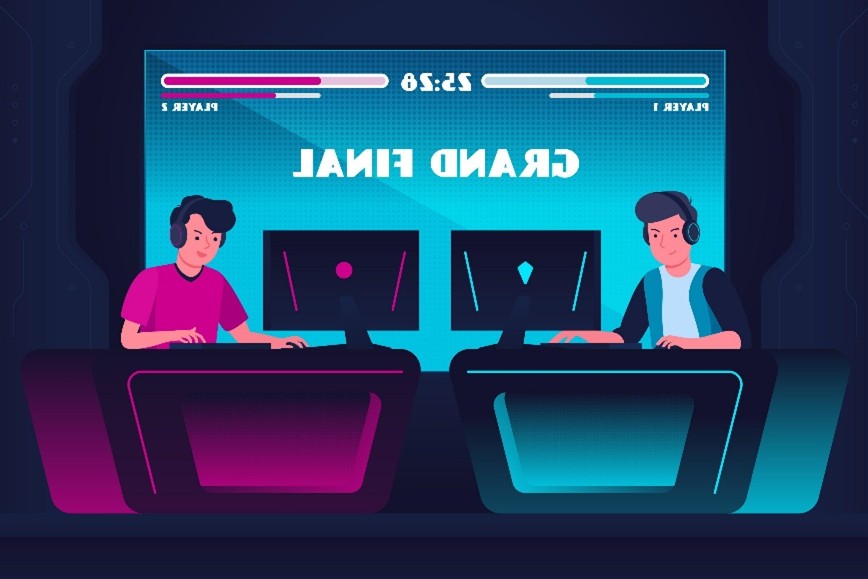
designed by Freepik
Wage and hour violations are increasingly common in the esports industry because of the long hours and blurred lines between work and personal time. Mandatory practice sessions, content creation, required streaming, travel to tournaments, promotional appearances, and off-the-clock communications often go unpaid. Under both New York and New Jersey law, non-exempt employees must be paid for all hours worked and must receive overtime when they exceed statutory limits. A flat rate, prize-only compensation, or “exposure” does not satisfy wage laws when the worker is functionally an employee.
The fighting game tournament circuit offers another example. Major organizers faced labor complaints after relying on prize-only participants and unpaid production staff while generating revenue through sponsorships, ticket sales, and media rights. In response to mounting pressure from workers, sponsors, and regulators, several organizers publicly restructured their labor models to avoid potential wage claims.
The culture within esports has also begun to face long-overdue scrutiny. Harassment, hostile work environments, and retaliation are common complaints in a space that has historically operated with little oversight. New York recently strengthened the New York State Human Rights Law so that all employers are covered regardless of size, harassment no longer has to be severe or pervasive to be unlawful, and independent contractors are explicitly protected. New Jersey’s Law Against Discrimination similarly provides broad protections to employees and contractors and strictly prohibits retaliation against anyone who raises concerns about workplace misconduct or wage violations. When a player or staff member is benched, demoted, excluded, or terminated after speaking up, that conduct may violate state law even if the employer claims it was a business decision.
Many esports workers are also asked to sign contracts containing non-compete clauses, non-disparagement provisions, sweeping nondisclosure agreements, and mandatory arbitration clauses. New York has imposed new limits on non-competes, and New Jersey courts continue to closely examine restrictive agreements, especially when workers lack bargaining power. No contract can lawfully waive a worker’s right to be paid or to report discrimination or retaliation.
These legal risks are no longer theoretical. In recent years, content houses and esports media companies in New York and California have quietly settled wage and misclassification claims brought by editors, stream managers, and social media staff who were paid flat stipends or revenue splits while being required to work fixed schedules under company control.[1] The shift across the industry toward guaranteed salaries and formal employment models did not happen by accident. It happened because the law is finally catching up to the realities of the changing employment landscape.
As esports continues to professionalize, the legal accountability of organizations within esports grows as well. What once operated in a gray area is now subject to the same employment laws that govern traditional workplaces. Players, creators, and staff deserve the same legal protections as workers in any other industry.
If you have any questions regarding your rights as an employee, creator, or gamer you should seek an experienced attorney who concentrates in employment law. Our firm has been concentrating in employment law for over twenty-three (23) years!
En nuestra firma hablamos español. This blog is for informational purposes only. It does not constitute legal advice and may not reasonably be relied upon as such. If you face a legal issue, you should consult a qualified attorney for independent legal advice regarding your particular set of facts. This blog may constitute attorney advertising. This blog is not intended to communicate with anyone in a state or other jurisdiction where such a blog may fail to comply with all laws and ethical rules of that state or jurisdiction.
[1] Activision to settle with Department of Justice over esports wages
[1] More Than Just A Game: The Labor and Employment Issues Within Esports
[2] Office of Public Affairs | Justice Department Files Lawsuit and Proposed Consent Decree to Prohibit Activision Blizzard from Suppressing Esports Player Compensation | United States Department of Justice
[3] In re: Overwatch League Antitrust Litigation, No. 2:19-cv-01029 (C.D. Cal. 2019). / Competitive Impact Statement: U.S. v. Activision Blizzard, Inc.