
New Jersey Transparency Act Might Get Clarification Soon
December 18, 2025
Seasonal Workers in the Tree Care Industry: Legal Obligations and Risk Management
January 12, 2026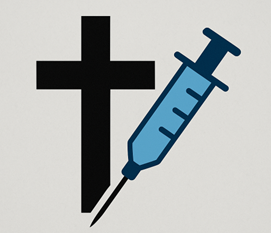
December 17, 2025
By Ty Hyderally, Esq., Francine Foner Esq.
How must a public employer administer its exemption policy to a vaccine mandate? That was considered by the Court recently in the case of Carbone v. City of New York, 2025 U.S. Dist. LEXIS 226110, 2025 LX 543802, 2025 WL 3206658 (S.D.N.Y. Nov. 17, 2025).
Charles Carbone worked for the New York City Department of Transportation (DOT) as an assistant highway repairman between July 2014 and February 2022. In October 2021, the DOT mandated that all municipal employees show that they had received at least one vaccination against COVID-19 by October 29, 2021, unless they received a medical or religious exemption. Carbone asserted that the vaccine was contrary to his Catholic faith, claiming that “Moderna and Pfizer used aborted fetal cell lines in manufacturing their respective vaccines,” and “[a]s a faithful [C]atholic, taking the COVID-19 vaccine would constitute a sin against God and a violation of His Commandments.” Id. at *2. Carbone supported his request with a letter from his longtime priest.
However, the City denied Carbone’s request, asserting in the denial letter that during a “cooperative dialogue,” Carbone expressed that his objections were based primarily on his personal views and false information, as opposed to his religious views. The City then denied Carbone’s internal appeal and gave him three days to submit proof of vaccination. Carbone did not do so, and, on February 11, 2022, the City terminated him for his failure to get the COVID-19 vaccine. However, before Carbone’s termination, the City issued “Guidance on Accommodations for Workers” which included as a qualifying reason for providing a religious exemption from a vaccine mandate that the vaccine “was developed and/or tested using fetal cells that the worker is concerned may have been the result of an abortion.” Id. at *4.
Carbone filed a complaint in New York State Court against the City and the DOT alleging religious discrimination under the New York State Human Rights Law (NYSHRL) and the New York City Human Rights Law (NYCHRL), and the Free Exercise Clause of the First Amendment. The Defendants then removed the case to the United States District Court for the Southern District of New York and moved to dismiss Carbone’s complaint for failure to state a claim. Carbone successfully defeated the motion to dismiss his claims for failure to accommodate his religious beliefs under both the Free Exercise Clause of the First Amendment, the NYSHRL and NYCHRL.
The Court explained that under the Free Exercise Clause of the First Amendment, where a public entity offers religious exemptions to vaccine mandates, the exemption must be applied in a neutral manner. Carbone alleged that his exemption request was not applied to him in a neutral manner as “his exemption request was denied because of hostility to his religious beliefs and [because] other similarly situated employees were granted accommodations while he was not.” Id. at *9. The Court agreed that the Carbone sufficiently alleged that the City had applied its exemption policy to Carbone in a non-neutral manner.
First, the Court found that the allegations reflected that the DOT examiner disregarded, questioned and may have even ridiculed Carbone’s religious objection to the vaccine. The Court opined that Carbone’s allegations reflected that the City had exhibited hostility towards Carbone’s religious beliefs, which contradicted neutral application of its exemption policy. Second, the Court found that Carbone had sufficiently alleged that the DOT examiner improperly determined that Carbone’s religious reasons were outweighed by his personal reasons for not wanting to get the COVID-19 vaccine. The Court observed that such actions could also violate a neutral and general application of the DOT’s exemption policy, by improperly considering the validity of Carbone’s interpretation of his religious beliefs. The Court thus held that, “DOT’s exemption procedure cannot survive strict scrutiny as applied to Carbone, however, because denying religious accommodations based on the examiner’s weighing of the applicant’s religious beliefs against non-religious considerations is not narrowly tailored to serve the City’s interest in preventing the spread of COVID-19.” Id. at *13.
The Court also found that Carbone had adequately alleged claims for failure to accommodate his religious beliefs under both the NYSHRL and NYCHRL. Under both statutes, the Court explained that a complaint satisfactorily pleads a claim for failure to accommodate where the plaintiff demonstrates: (1) he has a bona fide religious belief that conflicts with an employment requirement; (2) he informed the employer of his belief; and (3) he was disciplined for failure to comply with the conflicting employment requirement. Id at *10. The Court found that Carbone adequately alleged facts to demonstrate these elements. The City disputed facts alleged by Carbone regarding the sincerity of his religious beliefs and whether he notified the City of his religious belief when making his accommodation request. However, the Court denied the motion to dismiss Carbone’s complaint at this stage of the litigation, observing that these disputes could be tested in discovery, but for purposes of the motion to dismiss the Court must accept the allegations to be true. For the same reasons the Court found that it could also not dismiss Carbone’s claims on a motion to dismiss based on disputed facts regarding whether the exemption to Carbone would impose an undue hardship on the City. However, the Court did dismiss, albeit without prejudice, Carbone’s claim under the NYCHRL for failure to engage in a cooperative dialogue, as Carbone acknowledged that the DOT had offered him information about its accommodation-request process, spoke with the DOT examiner about this exemption application, and utilized the DOT’s appeal process. Id. at *23.
This decision supports the right of public employees to receive neutral application of a public employer’s vaccine exemption policy and not allow an employer to second guess the sincerity of an employee’s religious beliefs or base exemption decisions based on hostility towards an employee’s religious beliefs.
If you feel that you are the target of discrimination, harassment, whistleblower retaliation, or some other issue in the workplace, or if you have any questions regarding your rights as an employee, you should seek out an experienced attorney who concentrates in employment law. Our firm has been concentrating in employment law for over twenty-two (22) years!
En nuestra firma hablamos español.
This blog is for informational purposes only. It does not constitute legal advice and may not reasonably be relied upon as such. If you face a legal issue, you should consult a qualified attorney for independent legal advice about your particular set of facts. This blog may constitute attorney advertising. This blog is not intended to communicate with anyone in a state or other jurisdiction where such a blog may fail to comply with all laws and ethical rules of that state or jurisdiction.